Concrete shed pad in Austin: size it to the shed
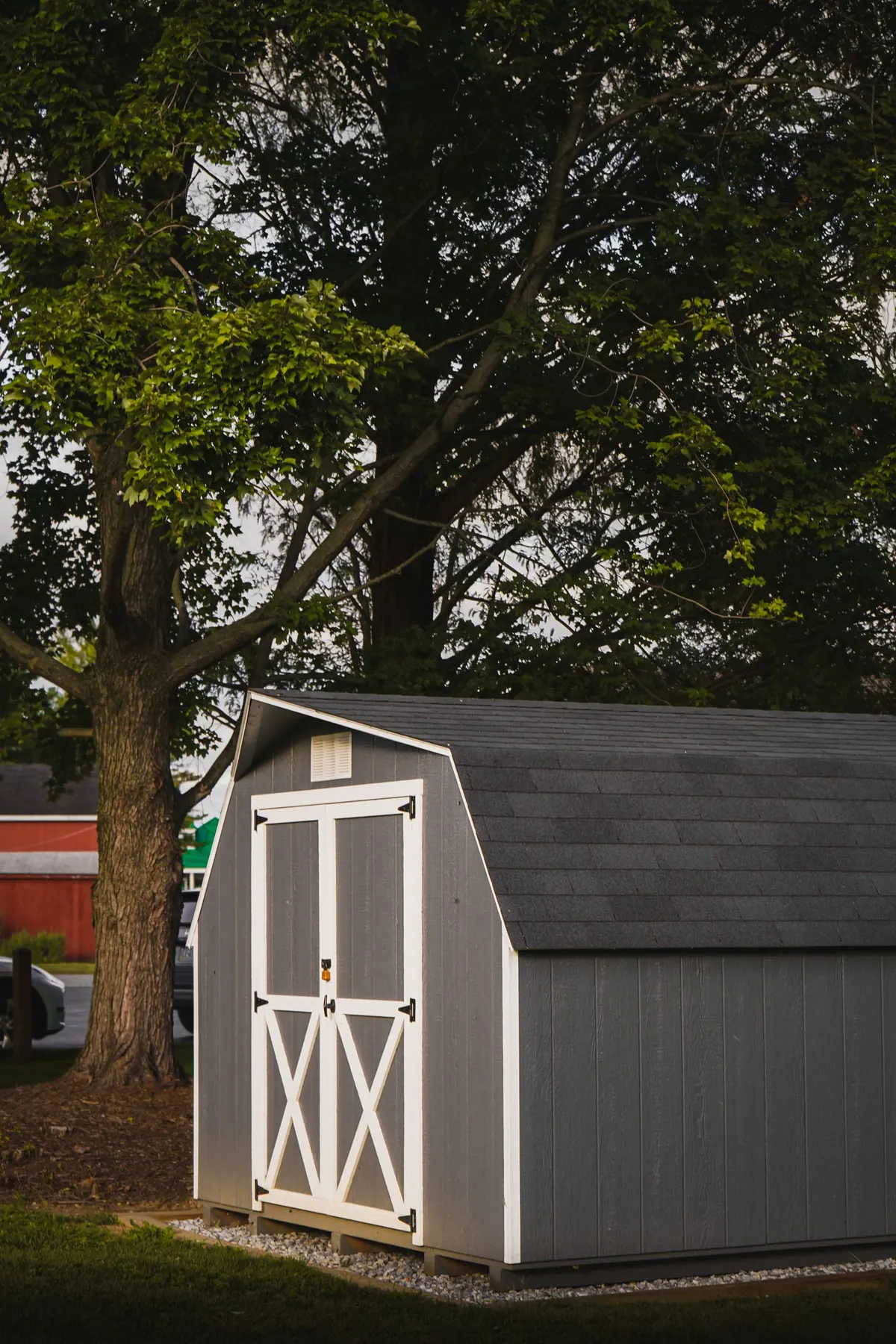
A shed pad is one of the simplest slabs, which is why it's worth getting the two decisions right: size and level. The pad should be a few inches bigger than the shed's outside dimensions so the walls bear on solid concrete, and dead level so the doors close. Done on Austin clay without a base, a pad tilts as the clay swells and dries; done on a compacted base, it stays put.
| Shed | Shed area | Typical pad | Concrete at 4 in (net) |
|---|---|---|---|
| 8x10 | 80 sq ft | about 9x11 | 1.22 cu yd |
| 10x12 | 120 sq ft | about 11x13 | 1.77 cu yd |
| 12x16 | 192 sq ft | about 13x17 | 2.73 cu yd |
| 10x20 | 200 sq ft | about 11x21 | 2.85 cu yd |
| 12x20 | 240 sq ft (over the exemption) | about 13x21 | 3.37 cu yd |
Swipe the table sideways to see every column →
Pad sizes allow about 6 inches past each wall; follow the shed maker's instructions where they differ. Volume computed for the pad at 4 inches.
Other sizes: run them through the concrete slab calculator.
The 200 square foot line in Austin
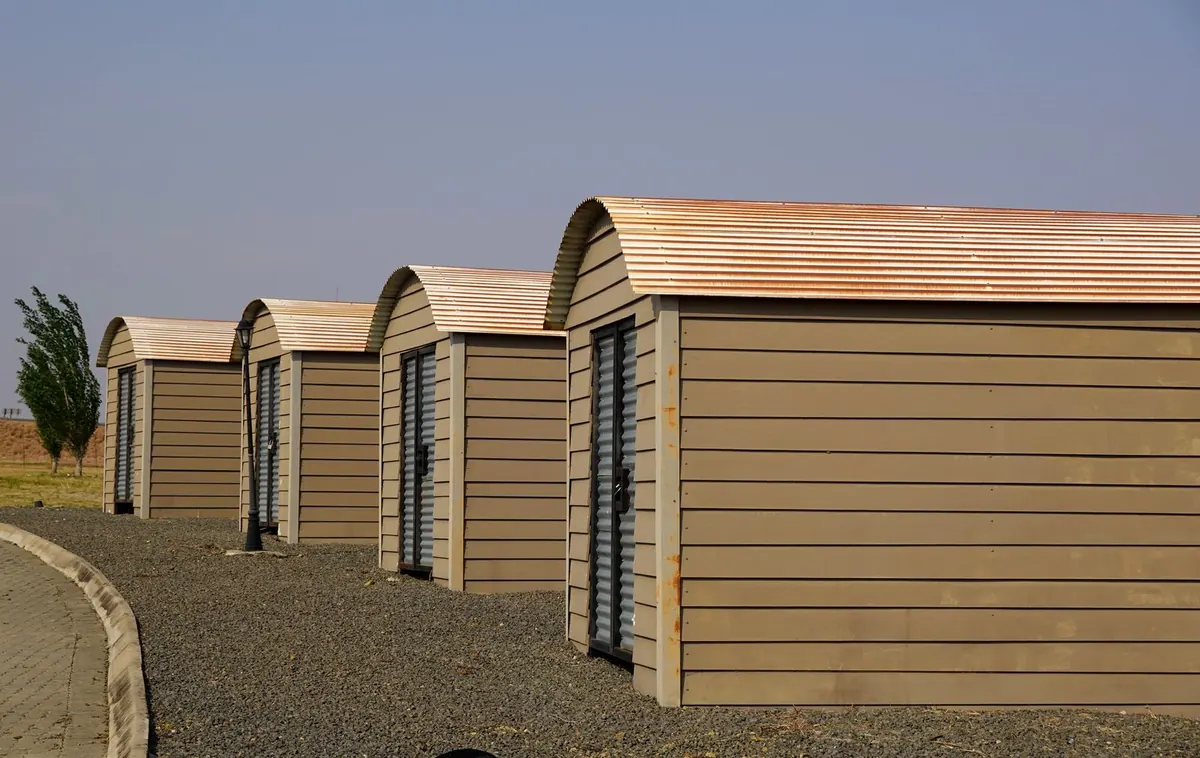
The City of Austin exempts a one-story detached accessory structure that is no more than 200 square feet, no more than 15 feet tall, doesn't create a dwelling, has no plumbing and isn't in a flood hazard area. That makes 10x20 the biggest common shed that skips a building permit; a 12x20 at 240 square feet doesn't. The pad is exempt flatwork in both cases, but it still counts toward impervious cover.
Thickness, base and steel
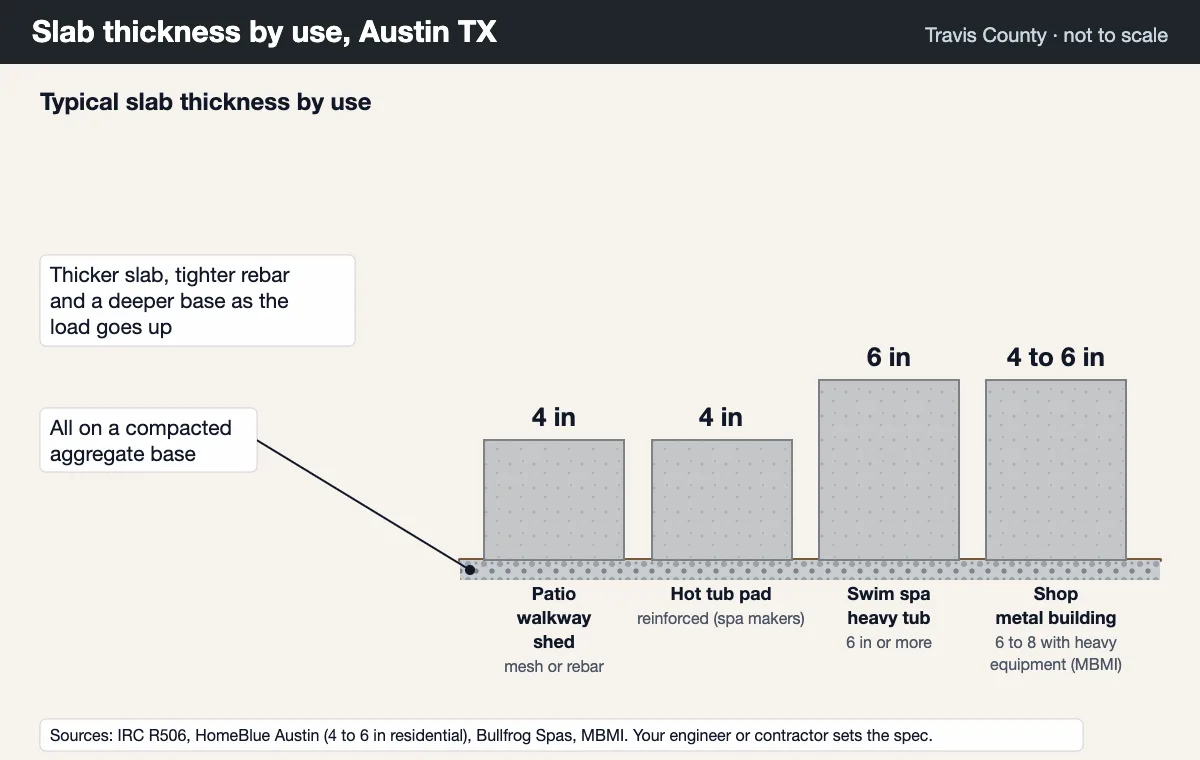
About 4 inches of concrete on a compacted base suits a storage shed, with mesh or light rebar to keep any crack tight. The residential code's vapor retarder rule doesn't apply to unheated accessory structures (IRC R506.2.3), but a shed that will hold paper, tools that rust or a future office benefits from one.
Gravel vs concrete under a shed
| Gravel base | Concrete pad | |
|---|---|---|
| Floor | Shed's own wood floor on skids | Concrete is the floor, or the shed floor sits on it |
| Drainage | Water passes through | Pad sheds water; slope it away |
| Anchoring | Ground anchors | Bolts or anchors into concrete |
| Impervious cover (Austin) | Gravel over pervious ground used only for landscaping or pedestrians is excluded | Counts |
| Best for | Small wood sheds with floors | Prefab metal sheds, workshops, mower and ATV storage |
Swipe the table sideways to see every column →
Impervious cover rule from the City of Austin residential application's definition (LDC 25-1-23).
Signs a concrete shed pad is worth it
- The shed has no floor of its own, or it's a metal kit
- You'll roll a mower, ATV or tool cart in and out
- The yard is clay that turns soft after rain
- The old shed's skids have rotted or sunk
- You want to bolt the shed down against wind